Research Projects
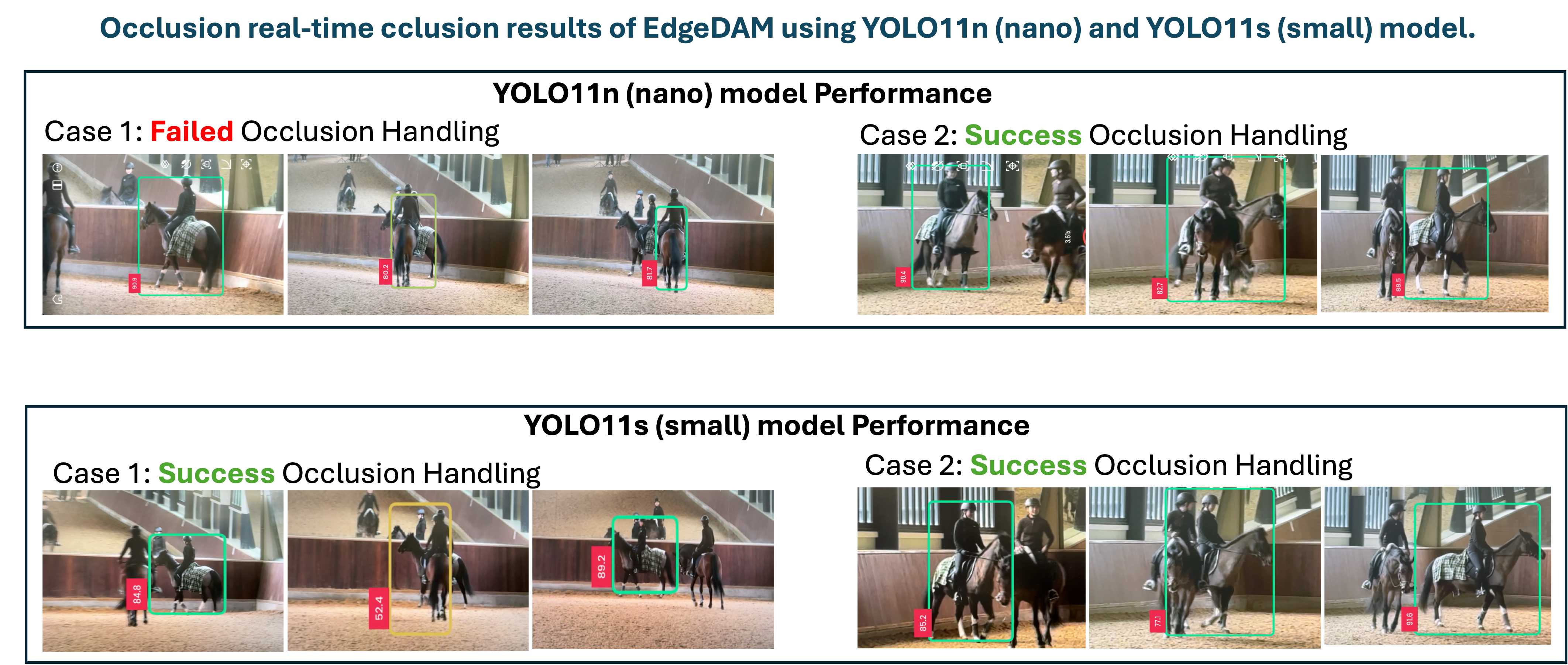
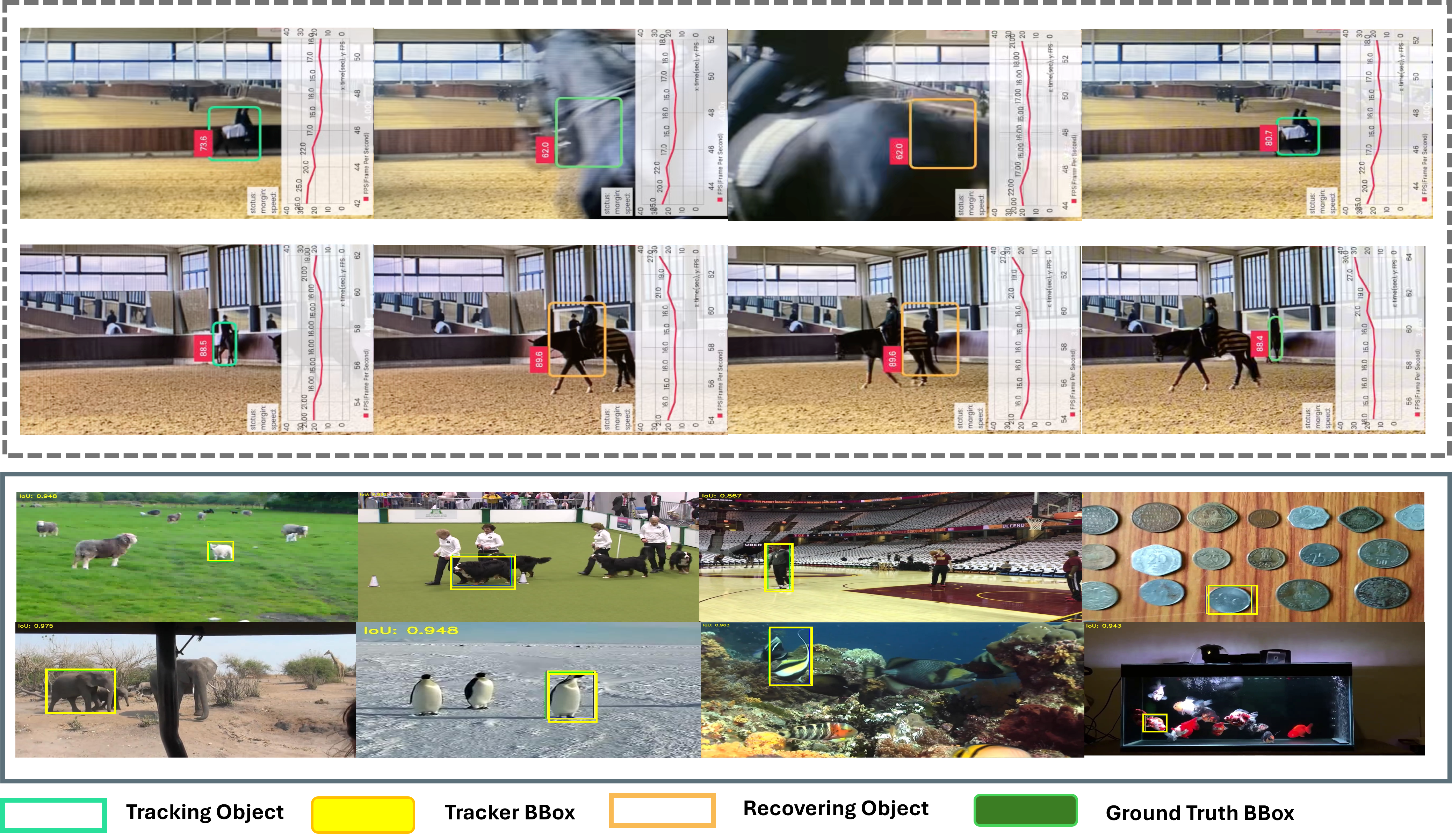
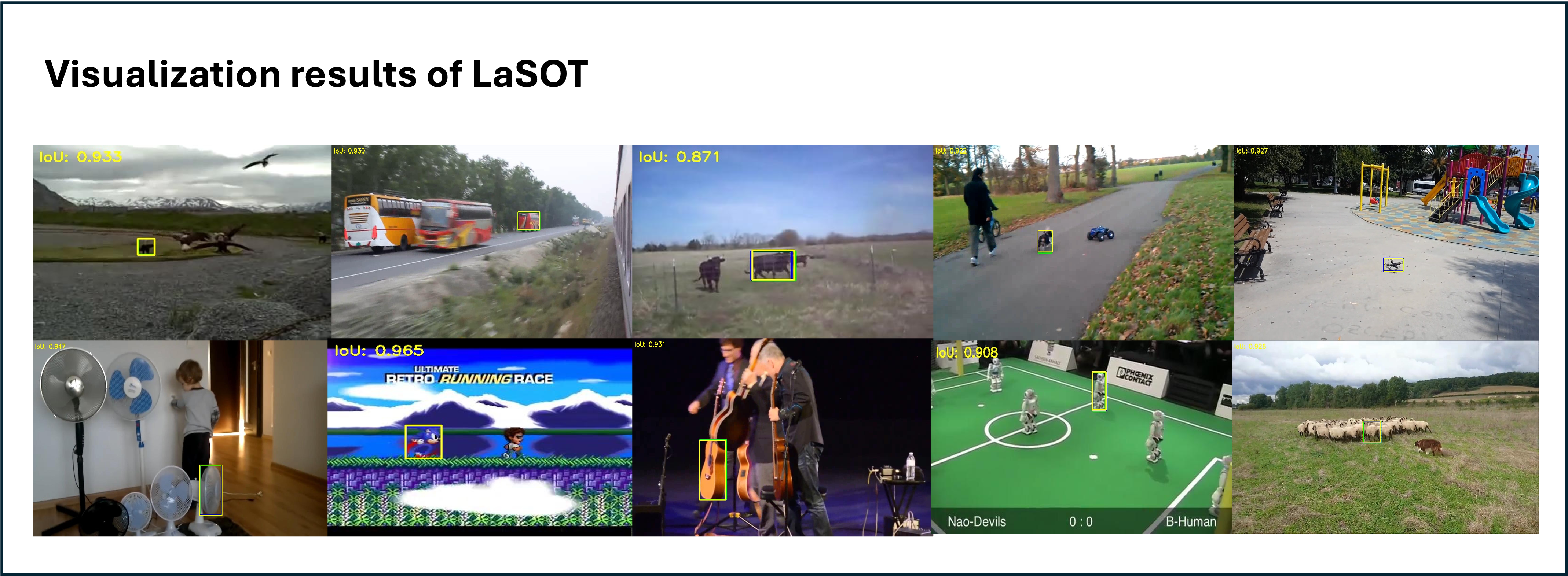
EdgeDAM Results
EdgeDAM is a lightweight real-time object tracking framework for mobile devices, designed for robust tracking under occlusion, distractor interference, and fast motion.
Results
Large-Scale 2D Auto-Labeling and Keyframe Selection for Robotics Datasets
Designed an end-to-end 2D auto-labeling pipeline for large-scale robotic perception datasets, enabling efficient pseudo-label generation for object detection models.
Developed a keyframe selection strategy using DINOv3 self-supervised visual representations to identify semantically diverse and informative frames, reducing redundancy in long video sequences.
Leveraged DINOv3 feature similarity and temporal consistency to filter near-duplicate frames, improving dataset diversity and annotation efficiency for industrial-scale data collection.
Integrated the selected keyframes with a 2D object detection auto-labeler to generate high-quality pseudo-labels, significantly minimizing manual annotation cost while preserving training performance.
Applied the pipeline to real-world robot-collected data, supporting scalable dataset understanding and continuous model improvement in autonomous navigation scenarios.
3D Mesh Simplification and Compression Analysis
Developed an automated pipeline for 3D mesh simplification and compression analysis across multiple decimation levels.
Implemented a Python–Open3D framework to batch-process polygonal meshes (OBJ/PLY/STL/OFF) using quadric-error-based decimation at varying target triangle ratios.
Designed evaluation metrics to quantify compression–quality trade-offs, including vertex and triangle reduction, file size compression ratio, and approximate Chamfer distance.
Built an automated reporting system exporting per-model JSON summaries, enabling efficient comparison of geometric distortion across simplification levels.
Optimized mesh preprocessing with degenerate triangle removal and normal recomputation, improving robustness for large-scale mesh datasets.
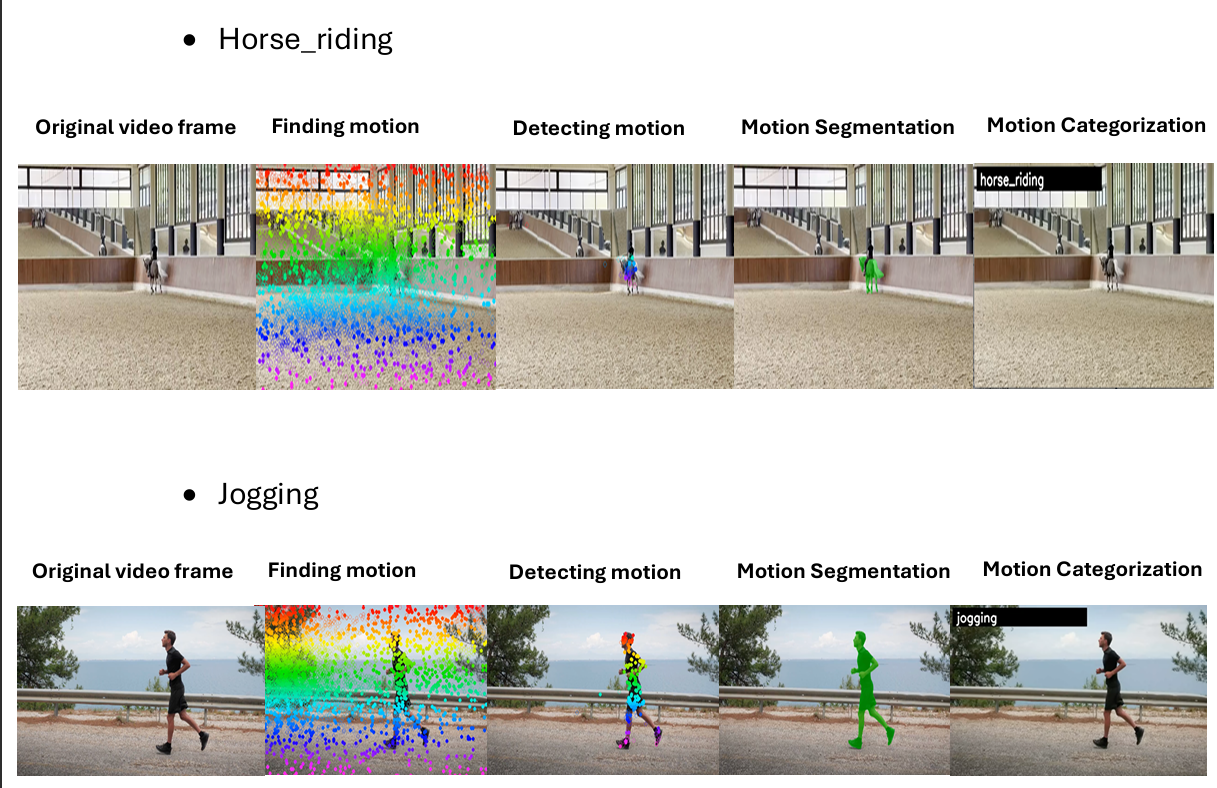
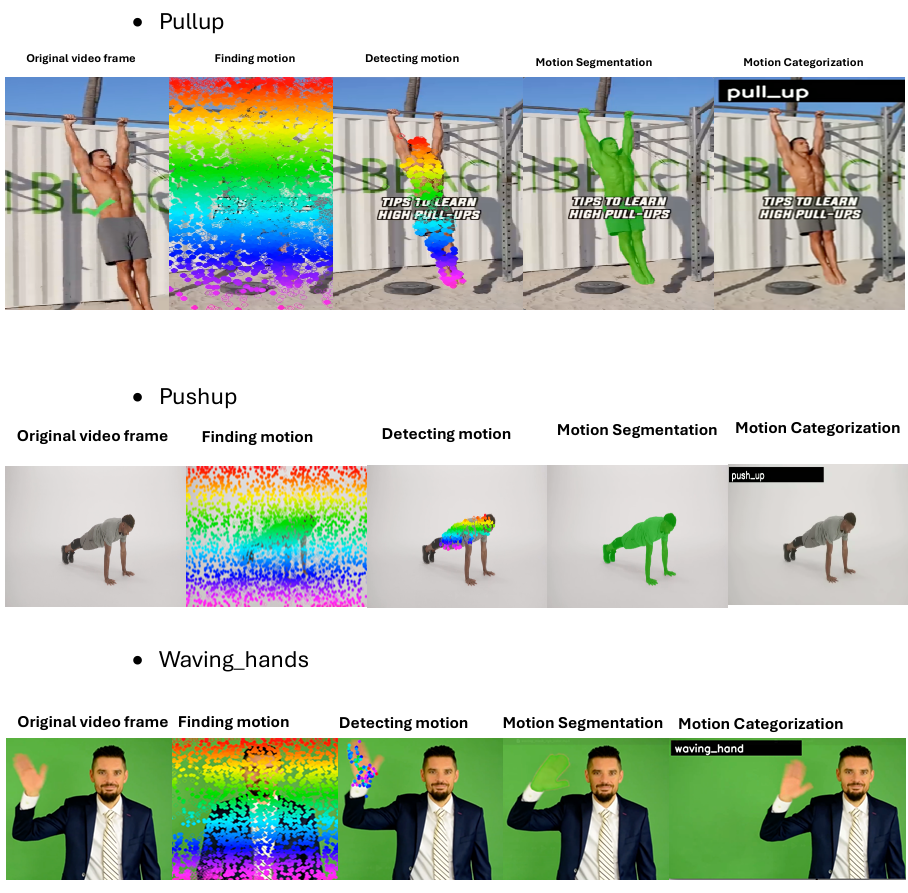
Motion Categorization using Generative AI Models
Developed a real-time 2D motion categorization framework for sports applications, focusing on dynamic trajectory understanding and prediction.
Generated 2D object tracks and depth maps using off-the-shelf detection and depth estimation models as input to a motion encoder.
Designed a track encoder-decoder architecture that integrates DINO visual features to decouple motion dynamics from semantic appearance.
Utilized SAM2 to group dynamic trajectories belonging to the same object and generate fine-grained moving object masks for improved motion segmentation.
Results
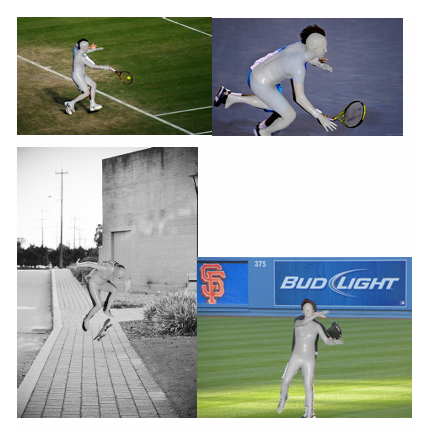
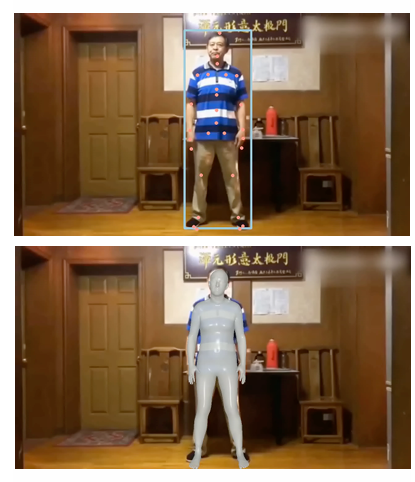
3D Pose Estimation and Avatar Generation
Developed a 3D human pose estimation pipeline for avatar generation using monocular RGB input.
Employed 2D pose and object detection models to extract joint keypoints and structural cues from video frames.
Lifted 2D predictions into 3D space via RGB-based depth reasoning and point projection to generate coarse 3D meshes.
Applied human motion and texture modeling techniques to generate temporally consistent 3D avatars suitable for visualization and animation tasks.
Results